
Engineering for Online Plans
Engineering for Online House Plans – Structural Design for Permit Approval
INTRODUCTION
Most online house plans are not engineered, and they rarely meet the strict seismic and wind requirements of Oregon and Washington. Homeowners often discover this only after submitting plans to their building department — and being told:
- “A licensed engineer must provide structural design.”
- “Where is the lateral/seismic design?”
- “These plans are missing shear walls.”
- “Provide foundation engineering and calculations.”
If you purchased plans online and now need engineering, Ogren Engineering can help.
We provide the site-specific structural engineering required for permit approval, including seismic design, wind loads, shear walls, beams, foundations, and engineering calculations.
Here, we explain exactly what online plans are missing, why Pacific Northwest codes are different, and how we engineer purchased plans so your project can proceed smoothly.
SECTION 1 — Why Online House Plans Fail in Oregon & Washington
Online plans are typically created for generic U.S. conditions, not for code-heavy regions like the Pacific Northwest.
The most common reasons plans are rejected:
1. No Seismic Design (the biggest reason)
Oregon and Washington are in Seismic Design Categories D1 and D2.
Generic plans usually assume Category A, B, or C — and cannot pass review without engineered design.
Missing items include:
- Shearwall design
- Holdowns
- Nailing schedules
- Lateral load path
- Roof/diaphragm design
- Seismic detailing for connections
2. No Wind Load Design
Local wind speed requirements can vary widely.
Your building department will require calculations, not assumptions.
3. Foundation Design is Too Generic
Online plans rarely include:
- Soil assumptions
- Footing sizes
- Reinforcement details
- Stem wall engineering
- Bearing pressure checks
- Retaining wall engineering
4. Beams and Headers Are Not Engineered
Plans often show “typical sizes” that are not adequate under local loading.
5. Snow Load Requirements Are Missing
Even within Oregon, snow load varies from 25 psf to 100+ psf.
Generic plans can't account for this.
6. When Do Building Departments Require an Engineer’s Stamp?
Building departments do not explicitly require an engineering stamp just because a homeowner purchased plans online.
What they do require is that all plans must either:
- Meet all local prescriptive building code requirements,
OR
- Be engineered by a licensed Professional Engineer (PE).
Online house plans often fail #1 — not because they are “online,” but because they do not match local code conditions.
Why prescriptive requirements usually fail in the Pacific Northwest:
Oregon and Washington use:
- Seismic Design Category D1 or D2 (very high)
- Region-specific wind loads
- Varying snow loads
- Site-specific soil and foundation requirements
The prescriptive code path (IRC) has strict limits. Once a design exceeds those limits, engineering is mandatory.
Most online plans exceed prescriptive limits in at least one of these areas:
- Too many window openings → weak shear walls
- Open floor plans → inadequate bracing
- Roof designs that don’t meet local snow loads
- Generic foundations not suitable for local soils
- Multi-story layouts without proper lateral load paths
- Garages with wide door openings
- Tall walls or vaulted ceilings
Result:
Even though the plans are “complete,” they cannot be permitted without engineering.
So building departments ask:
“Provide engineering for lateral/seismic, wind, or foundation conditions.”
This is why homeowners often feel blindsided — the plans looked ready to build, but code requirements weren’t met.
The key point:
Online plans are not rejected because they are online.
They are rejected because they don’t meet the prescriptive requirements in the Oregon or Washington building codes.
Which means:
Engineering becomes required to get a permit — even for standard-looking homes.
SECTION 2 — How Ogren Engineering Fixes Online Plans
We provide the engineering needed to turn purchased plans into permit-ready construction documents.
Seismic/Lateral Design
- Shear wall layout
- Holdowns
- Nailing schedules
- Drag struts
- Load path verification
Wind Load Engineering
Design based on your site’s exposure and risk category.
Foundation Engineering
- Footing and stem wall sizing
- Soil bearing checks
- Retaining wall analysis
- Frost depth compliance
Beam & Header Calculations
- Roof beams
- Floor beams
- Garage door headers
- Interior load-bearing wall removals
Structural Notes & Details
We add the required structural pages:
- General structural notes
- Foundation details
- Framing details
- Shear wall schedule
- Connection details
Permit-Ready, Engineer-Sealed Plans
Once complete, your drawings will include:
- Structural calculations (PDF)
- Structural drawing sheets (PDF)
- PE stamp (where applicable)
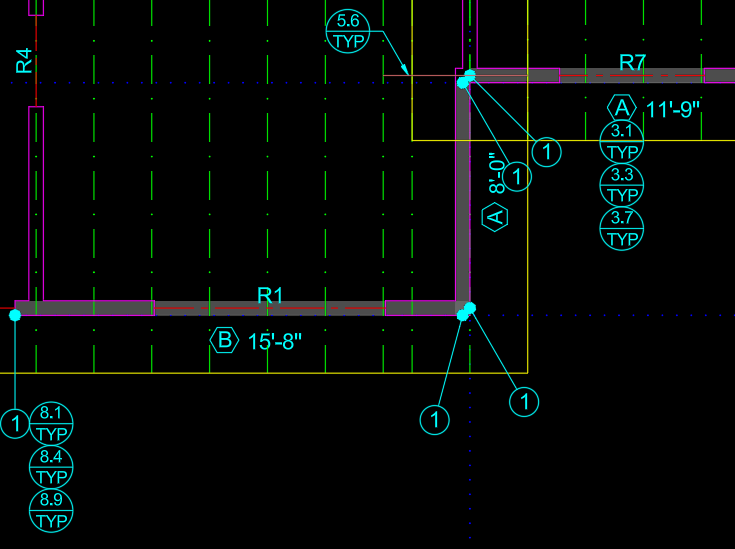
Example of the internal load-path review we perform when engineering online stock house plans.
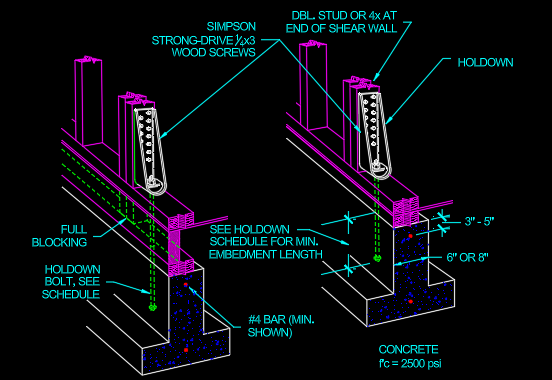
Online plans rarely include critical seismic details like holdowns and shear wall reinforcement. These must be engineered for permit approval.
This moves your project from “rejected” to approved.
SECTION 3 — What We Need From You
To engineer online home plans efficiently and accurately, we ask for:
- The full architectural plan set (PDF)
- The original AutoCAD files (.dwg) of your house plans
AutoCAD files are required because they allow us to integrate structural sheets directly into the plan set, maintain precise dimensions, and ensure the final drawings meet permit requirements. They also reduce drafting time and help keep your project cost down.
- Any modifications you want
- Your building site address (used to determine seismic, wind, and snow design criteria)
- Soils information, if available
- Any comments or correction notices from the building department
Once these items are received, most projects follow a predictable workflow and can be turned around quickly.
SECTION 4 — Engineering Online Plans vs. Traditional Custom Home Design
Many homeowners assume online plans save money — and they can — but only after engineering is complete.
We position this gently but honestly:
- Online plans provide a good architectural starting point
- But structural engineering ensures safety, code compliance, and permit approval
- Ogren Engineering fills this essential role
This sets the expectation that engineering is not optional, and you are simply doing the required piece the plan seller did not include.
SECTION 5 — Why Hire Ogren Engineering
Licensed Professional Engineer
Practicing structural engineering in the Pacific Northwest.
Deep experience with local jurisdictions
City of Portland, Washington County, Clackamas County, Yamhill County, and SW Washington.
Fast, responsive turnaround
Many homeowners come to us mid-permit — we understand the urgency.
Practical, buildable solutions
We design with real construction practices in mind.
Clear, organized calculations
Building officials appreciate the clarity (and that leads to faster approvals).
SECTION 6 — Service Area
We provide engineering for online plans throughout:
- Portland
- Beaverton
- Hillsboro
- Gresham
- Lake Oswego
- West Linn
- Tigard
- Tualatin
- Vancouver, WA
- Camas / Washougal
- Clark County
- Clackamas County
- Washington County
- Multnomah County
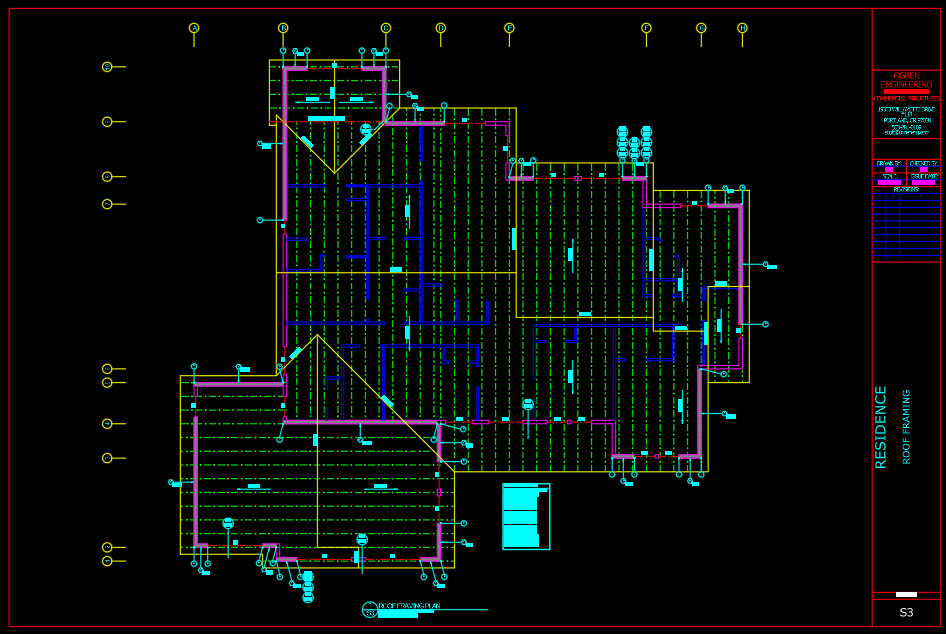
A completed structural engineering plan set we create to make online home plans fully permit-ready.
SECTION 7 — Call to Action
Ready to move your project forward?
SECTION 8 — FAQ Engineering for Online House Plans
Online plans rarely include seismic, wind, or structural engineering. Oregon and Washington require site-specific engineering for permit approval.
Yes. We can engineer most plan sets, including those from national plan websites, designers, and stock plan companies.
We typically work directly with your architectural plan set, adding structural sheets and calculations to make it permit-ready.
Most projects are completed quickly depending on the complexity of the design and any building department deadlines.
Yes — we provide PE-stamped structural plans where required.
We can incorporate modifications such as larger windows, different beams, changed layouts, or structural upgrades.
Yes. These regions are in Seismic Categories D1 or D2, and engineered lateral design is required for nearly all new construction.